Thousands of workers suffer serious injuries each year during equipment servicing—many because proper lockout tagout (LOTO) procedures weren’t followed. At the heart of every effective LOTO program sits a simple but critical tool: the OSHA lockout tagout log sheet. It’s not just paperwork—it’s a real-time record of safety, accountability, and regulatory compliance.
Without a documented log, even the most rigorous safety training falls short. Audits fail. Incidents escalate. And facilities face steep OSHA penalties. This article breaks down exactly what a lockout tagout log sheet should include, how to use it effectively, and common pitfalls that undermine its value.
What Is a Lockout Tagout Log Sheet?
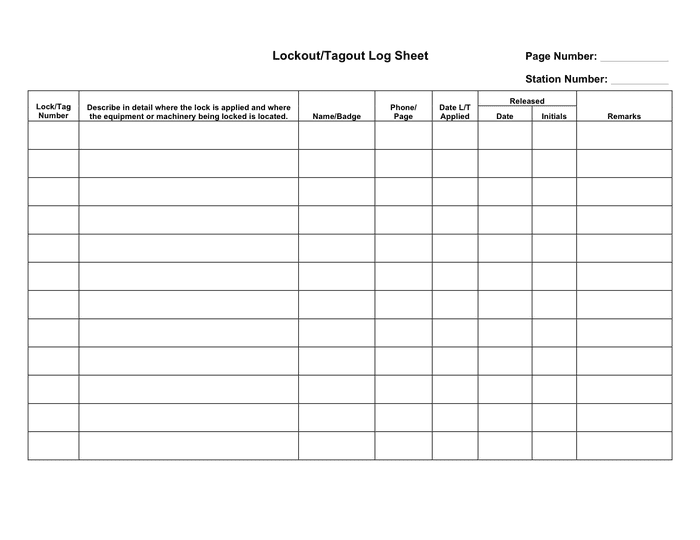
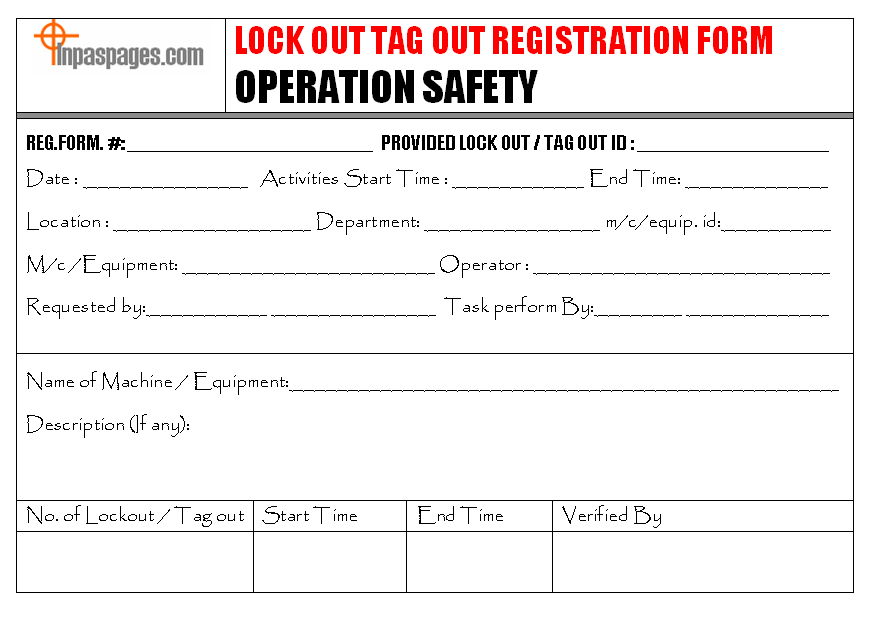
A lockout tagout log sheet is a formal record used to document each instance when machinery or equipment is shut down, isolated from hazardous energy sources, and secured using locks and tags. It verifies that proper LOTO procedures were followed and identifies who performed the lockout, when it started, and when it ended.
While OSHA standard 29 CFR 1910.147 doesn’t require a log sheet in every case, it does mandate periodic inspections of LOTO procedures—and those inspections must be documented. Most workplaces go a step further by using daily or per-job log sheets to track real-time compliance.
Why the Log Sheet Isn’t Optional in Practice
Even if not explicitly required for every shutdown, a log sheet is essential for:
- Accountability: Who applied the lock? Who removed it?
- Coordination: Multiple workers servicing the same machine need to know the status.
- Audit readiness: OSHA inspectors will ask for proof of compliance.
- Incident investigation: If something goes wrong, the log provides a timeline.
Facilities that rely on verbal communication or memory alone often fail when under pressure or during shift changes.
Key Elements of an Effective LOTO Log Sheet
A well-designed lockout tagout log sheet isn’t cluttered—it’s structured to capture only what matters. Here are the non-negotiable components:
| Field | Purpose |
|---|---|
| Date and Time (Start/End) | Tracks duration of lockout; critical for audit trails |
| Equipment ID or Name | Identifies exactly which machine is locked out |
| Department/Area | Helps supervisors monitor zone-specific risks |
| Authorized Employee Name & ID | Establishes responsibility for the lockout |
| Type of Energy Isolated | Electrical, hydraulic, pneumatic, thermal, etc. |
| Lock Number(s) and Tag ID(s) | Links physical devices to individuals |
| Reason for Lockout | Maintenance, repair, cleaning, etc. |
| Verification of Isolation | Confirms zero energy state before work begins |
| Shift Information | Ensures continuity across team changes |
| Clearance Sign-Off | Final approval before re-energizing |
Some facilities also include a section for supervisor approval, especially for high-risk tasks.
Real-World Example: Bottling Line Maintenance

Imagine a technician servicing a conveyor system in a beverage plant. The log sheet shows:
- Equipment: Conveyor Line #3 (Filling Station)
- Date: April 5 | Start: 07:45 AM | End: 10:15 AM
- Energy types: Electrical (480V), Pneumatic
- Locks applied: Lock #L304 (Jane Doe), #L305 (Sam Lee)
- Task: Replace motor coupling
- Verified isolation: Verified by Jane Doe at 07:55 AM
- Clearance: Signed off by Supervisor Alan Tran
This level of detail prevents someone from unknowingly re-energizing the line—and potentially injuring a worker still inside the guard.
Common Mistakes That Undermine LOTO Logs
Even facilities with excellent intentions make errors that compromise log sheet effectiveness.
1. Incomplete Entries Leaving fields blank—especially verification or end time—defeats the purpose. A log missing verification signatures suggests the zero-energy check wasn’t performed.
2. Using Generic Equipment Names “Machine #1” or “Pump in Back” aren’t specific enough. Use asset tags, serial numbers, or line identifiers.
3. Failing to Update in Real Time Logging entries at the end of the shift invites inaccuracies. Workers forget exact times or mix up lock numbers.
4. No Centralized Access If the log is locked in a supervisor’s office or only on paper at a distant kiosk, it’s not useful during emergencies or handoffs.
5. Ignoring Group Lockout Scenarios
When multiple workers service one machine, each must apply their own lock—and each must be listed. A single name on the log creates a deadly blind spot.
Paper vs. Digital LOTO Log Sheets: What Works Best?
The choice between paper and digital logs impacts accuracy, accessibility, and compliance speed.
| Factor | Paper Log Sheets | Digital LOTO Logs |
|---|---|---|
| Setup Cost | Low | Moderate to high |
| Accessibility | Limited to physical location | Cloud-based, mobile access |
| Real-Time Updates | Manual, delayed | Instant |
| Audit Trail | Hard to search | Searchable, timestamped |
| Integration | None | Can link with CMMS, ERP |
| Risk of Loss/Damage | High (fires, spills) | Low (backed up) |
When Paper Still Makes Sense Small facilities with low-maintenance frequency and stable staff may find paper logs sufficient. But if you have rotating shifts, multiple departments, or frequent maintenance, digital systems offer better control.
Digital Platforms Worth Considering For organizations ready to upgrade, here are five proven digital LOTO log solutions:
- Sphera LOTO
- - Cloud-based, integrates with EHS platforms
- - Supports multilingual workflows
- - Strong audit reporting
- Lockout PRO
- - Mobile-first design for technicians in the field
- - QR code scanning for equipment
- - Offline mode for remote sites
- ETQ Reliance
- - Full quality and safety suite includes LOTO modules
- - Ideal for regulated industries (pharma, food)
- - Robust compliance tracking
- Failsafe LOTO by Brady
- - Hardware + software combo
- - Lock management, log tracking, training records
- - On-premise or cloud
- iAuditor by SafetyCulture
- - Customizable LOTO checklists
- - Real-time photo and note capture
- - Free tier available for small teams
Digital logs aren’t just trendy—they reduce human error, speed up inspections, and make OSHA audits less stressful.
How to Conduct a LOTO Log Audit That Actually Works
OSHA requires at least one periodic inspection of energy control procedures annually. The log sheet is your primary evidence.
Audit Workflow:
- Select a representative sample of log entries (at least one per authorized employee).
- Cross-verify with physical locks: Are lock IDs on the log the same as those on the device?
- Interview the employee: Ask them to walk through their steps. Did they verify isolation?
- Check for consistency: Are all required fields completed? Are end times recorded?
- Document findings and corrections: Note deficiencies and retrain if needed.
A strong audit doesn’t just check boxes—it identifies systemic gaps. For example, if five technicians skipped verification, the issue isn’t individual negligence; it’s likely training or process design.
Red Flags During Audits
- Entries made in pencil (easily altered)
- Missing end times (suggests lockouts left active)
- One person listing multiple locks without justification
- No evidence of periodic reviews signed by supervisors
These aren’t just documentation issues—they’re compliance liabilities.
Integrating LOTO Logs into Broader Safety Culture
A log sheet shouldn’t be an isolated form. It’s part of a living safety system.
Link to Training Records Ensure every name on a log belongs to a certified, authorized employee. Cross-reference with training logs to confirm validity.
Use Logs for Near-Miss Analysis If a lock was removed prematurely, the log helps trace why. Was there miscommunication? Was the clearance process unclear?
Empower Frontline Workers Let technicians suggest log improvements. If they find a field confusing or redundant, revise it. Ownership increases compliance.
Automate Alerts Digital systems can warn if a lock has been active for 8+ hours or if re-energization lacks final sign-off.
Final Thoughts: Make the LOTO Log Sheet a Safety Habit
The OSHA lockout tagout log sheet is more than a formality—it’s a frontline defense against preventable injuries. Whether on paper or digital, it must be accurate, accessible, and actively used.
Start by auditing your current logs. Are they complete? Are they reviewed? Do workers understand their role in maintaining them?
Then, standardize the format across your facility. Train everyone—not just authorized employees—on how the log protects them.
Finally, treat each entry as a promise: a commitment that no machine will be serviced without full control of its energy sources.
Implement one improvement this week—whether it’s adding verification fields, switching to digital, or conducting a mini-audit. Small steps build bulletproof safety systems.
Frequently Asked Questions
What is the purpose of a lockout tagout log sheet? It documents each LOTO event, ensuring accountability, compliance, and safe coordination during equipment maintenance.
Does OSHA require a log sheet for every lockout? Not explicitly, but OSHA requires annual inspections of LOTO procedures—and those must be documented, which typically includes log entries.
Who should fill out the LOTO log? The authorized employee performing the lockout is responsible for completing the log.
Can digital logs replace paper LOTO logs? Yes, digital logs are acceptable and often superior, provided they’re secure, tamper-evident, and accessible for audits.
How long should LOTO logs be kept? At minimum, one year—especially for inspection records. Some facilities retain them for 3–5 years for liability protection.
Should contractors be listed on the log? Yes. Any outside worker performing servicing must follow your LOTO procedures and be documented on the log.
What happens if a log entry is missing? Missing entries create compliance risks. OSHA may cite the facility for inadequate documentation during inspections.
FAQ
What should you look for in OSHA Lockout Tagout Log Sheet Best Practices and Uses? Focus on relevance, practical value, and how well the solution matches real user intent.
Is OSHA Lockout Tagout Log Sheet Best Practices and Uses suitable for beginners? That depends on the workflow, but a clear step-by-step approach usually makes it easier to start.
How do you compare options around OSHA Lockout Tagout Log Sheet Best Practices and Uses? Compare features, trust signals, limitations, pricing, and ease of implementation.
What mistakes should you avoid? Avoid generic choices, weak validation, and decisions based only on marketing claims.
What is the next best step? Shortlist the most relevant options, validate them quickly, and refine from real-world results.